The Most Beautiful Landscapes in Haute-Savoie
From Lake Annecy to Mont Blanc and the Aravis: ways to compose in the mountains.
Haute-Savoie brings very different landscapes together in a compact area: lakeshores, glacial valleys, alpine meadows, and ridgelines. Choose an area to suit the weather and season, then take time to read the lines and layers before taking out your camera.
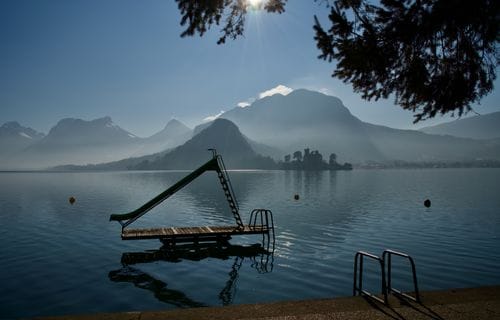
Lake Annecy and the Tournette
From the shore or nearby heights, mountain ranges stack above the water. Morning mist, changing skies, and reflections give the same panorama very different moods.
Photo tip: Place a jetty, shoreline, or tree in the foreground to add scale and lead the eye towards the Tournette.
Read the related blog article: Annecy: The Venice of the Alps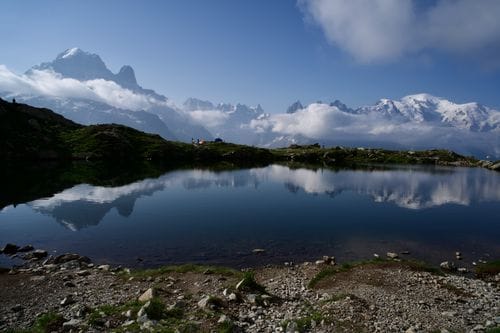
Lacs de Chéserys
Above Chamonix, these high-altitude lakes reflect Mont Blanc when the wind drops. Reaching them requires a hike, and access depends on snow conditions.
Photo tip: Arrive early for still water, and include the shoreline to balance reflections with the peaks.
Read the related blog article: Lac de Cheserys: A Mont Blanc Gem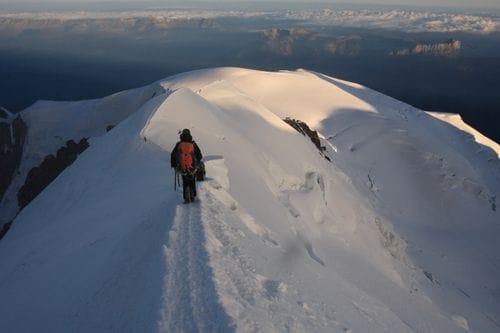
Aiguille du Midi and Mont Blanc
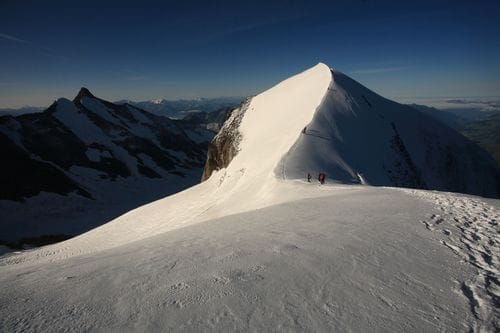
From Chamonix viewpoints, the massif unfolds across glaciers, aiguilles, and steep slopes. Clouds and shadows can add shape to these high-altitude views.
Photo tip: Use a wide lens to convey scale, then switch to a telephoto to isolate summits and glacial lines.
Read the related blog article: Aiguille du Midi: Roof of the WorldAravis range
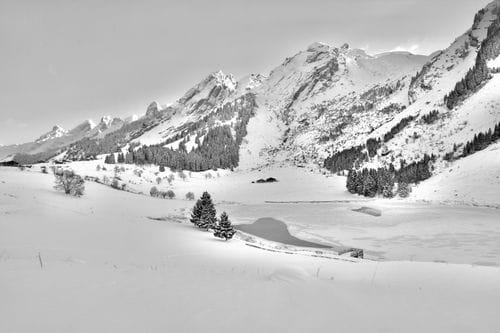
The meadows, forests, and valleys around La Clusaz change with the seasons. A break in the clouds or low-angle light is often enough to shape the scene.
Photo tip: Use a ridgeline or chalet as an anchor, then simplify the frame to give the mountains room.
Read the related blog article: La Clusaz: Authentic Aravis Village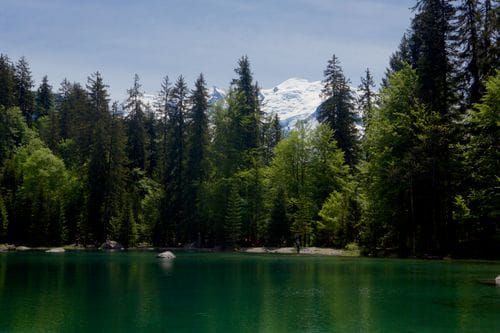
Lac Vert in Passy
At the foot of the Fiz range, forest frames the lake and opens onto the surrounding peaks on clear days. Colours and reflections shift quickly with the light.
Photo tip: Use trees as a natural frame and a polarising filter gently to preserve detail in the water.
Read the related blog article: Lac Vert in Passy: Photographing a Forest Alpine LakeRead the light
Terrain is easier to read when light comes from the side, early or late in the day. After rain, the air is often clearer; beneath overcast skies, focus on details and gentle contrast.
Build the image
Combine foreground, valley, and peaks to create depth. Check the frame edges, keep the horizon clear, and avoid including elements without a clear purpose. A nearby detail can turn a panorama into a story about a place.
Before you go
- Check the forecast, visibility, and access conditions.
- Choose an area and plan a backup if clouds hide the peaks.
- Pack suitable layers and respect trails and protected areas.
The finest landscapes do not always require the best-known viewpoint. In Haute-Savoie, watching the light, shifting your angle, and respecting the terrain are often enough to find a personal image.