The most beautiful lakes of Haute-Savoie
Five lakes, from the shores of Lake Annecy to high-altitude lakes facing Mont Blanc, and how to photograph them.
Haute-Savoie offers very different bodies of water: a large foothill lake, alpine lakes facing the glaciers, a forest lake and a resort lake. Here are five lakes I have photographed, with what I learned about light, reflections and the right time to go.
Destination Map
Chargement de la carte...
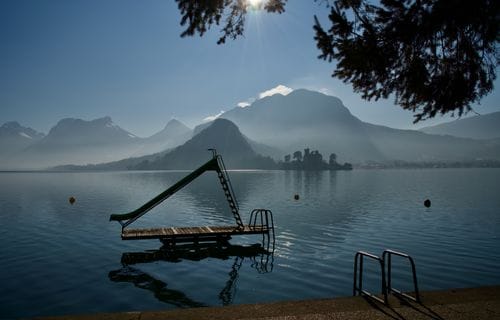
Lake Annecy
A large foothill lake, best photographed at dawn, when mist hangs over the water and the surrounding peaks, such as the Tournette, stand out in successive layers.
How to get there : Reach the shores in Annecy, Sévrier, or nearby villages by car, bike, or bus. Parking areas and bus stops are available near the waterfront; choose your viewpoint ahead of time and allow for traffic and crowds.
Recommended gear : A versatile 24–70 mm zoom suits lakeside views; a lightweight tripod helps in the low dawn light. A telephoto lens can isolate the Tournette through the mist.
Photo tip : Arrive before sunrise and shoot low from the shore or a jetty: the mist adds depth and simplifies the frame.
Read the related blog article : Annecy: The Venice of the AlpsLacs de Chéserys
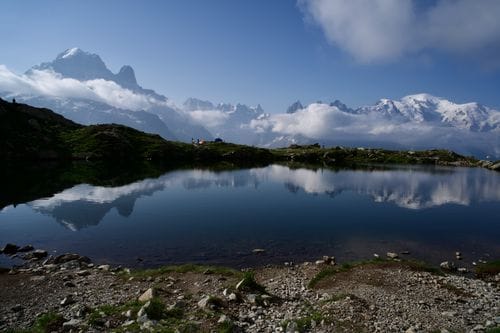
Above Chamonix, these high-altitude lakes reflect the Mont Blanc massif when the air is calm, especially at first light.
How to get there : From Chamonix, reach the La Flégère area in Les Praz, then follow the marked trail towards the Lacs de Chéserys. This is a mountain hike with significant climbing; check trail conditions and lift opening dates before setting out.
Recommended gear : Keep your pack light: a 16–35 mm wide-angle zoom for the lakes and peaks, a compact tripod for reflections, and spare batteries kept warm.
Photo tip : Aim for a windless dawn for a mirror reflection, and keep your kit light for the climb.
Read the related blog article : Lac de Cheserys: A Mont Blanc GemLac Blanc
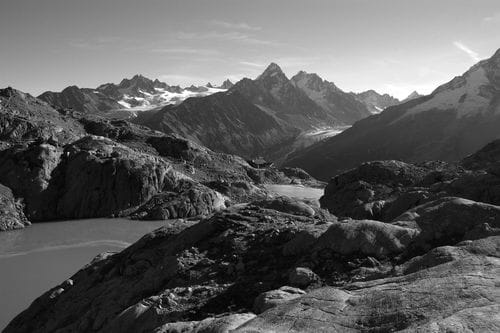
Facing the Aiguille Verte and the Mont Blanc massif, Lac Blanc changes mood completely with the clouds: layers of cloud give soft contrast, ideal for black and white.
How to get there : From Chamonix, go to La Flégère in Les Praz and follow the marked mountain trail towards the refuge and Lac Blanc. The route is demanding and weather-exposed; check access, snow conditions, and lift operations on the day.
Recommended gear : A 24–70 mm zoom covers most compositions; add a telephoto to isolate the peaks. A sturdy tripod and rain cover are useful, but keep your pack light for the climb.
Photo tip : When the sky is heavy, switch to black and white and work the textures of rock and cloud rather than colour.
Read the related blog article : Lac de Cheserys: A Mont Blanc GemLac Vert
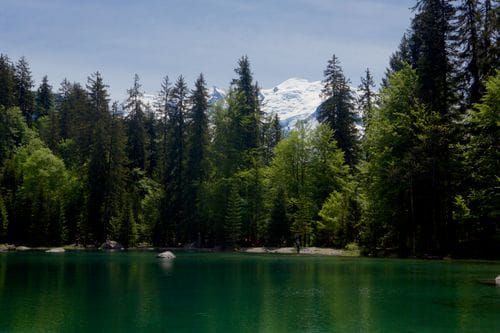
Tucked into the forest at Passy, it suits more intimate compositions: clear water, vegetation and open sky.
How to get there : From Passy, drive towards Plaine-Joux and park in an authorised space. A marked pedestrian trail leads through the forest to the lake; check seasonal access and parking conditions before you go.
Recommended gear : A circular polariser helps manage reflections; a bright standard lens and a microfibre cloth are handy for details by the water.
Photo tip : A polarising filter lets you control surface reflections and reveal the clarity of the water in sunny weather.
Read the related blog article : Lac Vert in Passy: Photographing a Forest Alpine LakeLac des Confins
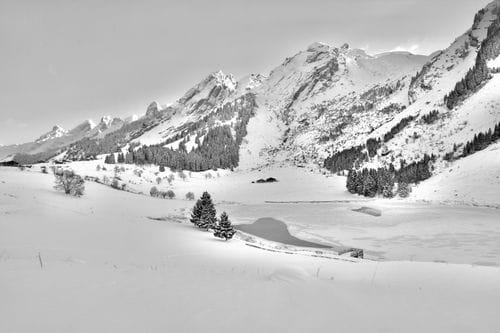
Near La Clusaz, it looks its best in clear, cold weather, when the air is crisp and the light sharp on the peaks.
How to get there : From central La Clusaz, follow the Route des Confins to the authorised parking areas, then walk to the lake on marked paths. In winter or during busy periods, check road and parking conditions before setting out.
Recommended gear : Pair a standard zoom for the wider view with a 70–200 mm telephoto to bring the Aravis peaks closer. Keep spare batteries and gloves warm in cold weather.
Photo tip : Cold, clear mornings give the best air transparency; protect batteries and hands from the cold.
Read the related blog article : La Clusaz: Authentic Aravis VillageWhatever the lake, wind and light decide everything: check the forecast the day before, start early and leave yourself room to turn back if conditions are not right. For high-altitude lakes, check snow cover and trail conditions before leaving, and leave no trace.