In planningOctober 2026
Florence - Cradle of the Renaissance
Florence, Tuscany, Italy
About the project
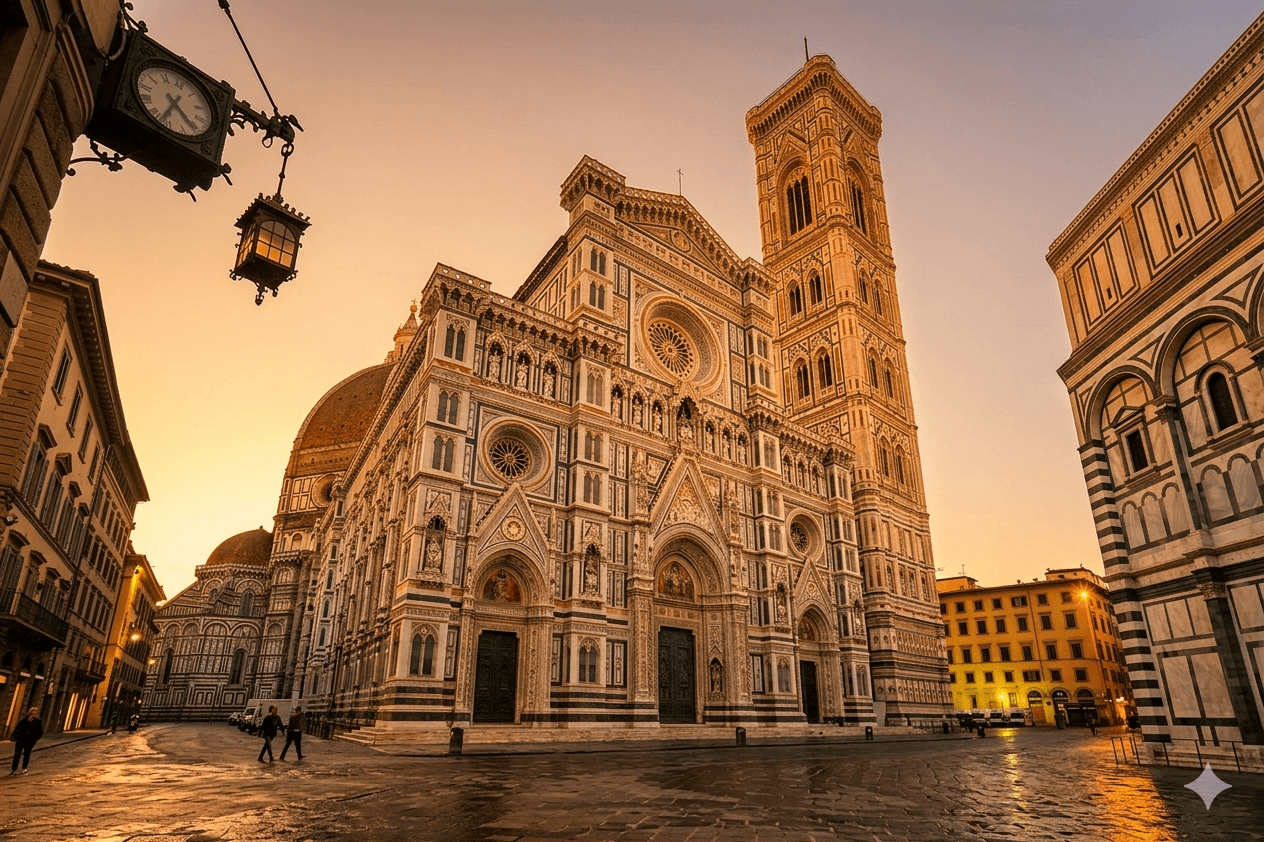
A UNESCO World Heritage Site since 1982, Florence is the cradle of the Italian Renaissance. Founded by the Romans in 59 BC on the banks of the Arno, it became in the 15th century the world's leading artistic center thanks to Medici patronage — funding Botticelli, Leonardo da Vinci and Michelangelo. The city holds the greatest concentration of art per capita in the world. Under Tuscany's golden light, every facade tells five centuries of creative genius.
Florence (Firenze) lies in a Tuscan basin ringed by hills, bisected by the Arno. Founded in 59 BC as a Roman veterans' colony, it became in the 13th century a banking powerhouse through the gold florin — the reference currency of all medieval Europe. The Medici family rose in the 15th century as the great Renaissance patrons: Lorenzo the Magnificent funded Botticelli's Birth of Venus and Primavera, Leonardo da Vinci and the young Michelangelo. Brunelleschi's dome (1436, 44 m diameter, 114.5 m total height), the first great dome built without wooden scaffolding since Antiquity, stands as the symbol of this architectural revolution. The historic center, UNESCO-listed in 1982 across 505 hectares, packs an unmatched density of museums, palaces and masterpiece-filled churches. For photographers, Florence offers Mediterranean light of rare quality: the warmth of ochre stone and terracotta rooftops creates unique warm tones during the golden hours of morning and evening.
Access
Florence is served by Amerigo Vespucci Airport (5 km from the center) and high-speed trains from Rome (1h30) and Milan (1h45) at Santa Maria Novella station. In the city, ATAF buses serve Piazzale Michelangelo (lines 12 and 13 from the center) and San Miniato al Monte (line 12). Giardino Bardini and the Loggia dei Lanzi are walkable from the historic center. The ZTL (Limited Traffic Zone) covers most of the center — parking at Il Parterre or Piazzale Michelangelo. For the Duomo dome, the Campanile and Giardino Bardini: online booking essential, especially April to October.
Location
Lieux
Points de vue
Chargement de la carte...
Photography Viewpoints
Piazzale Michelangelo
EasySunset
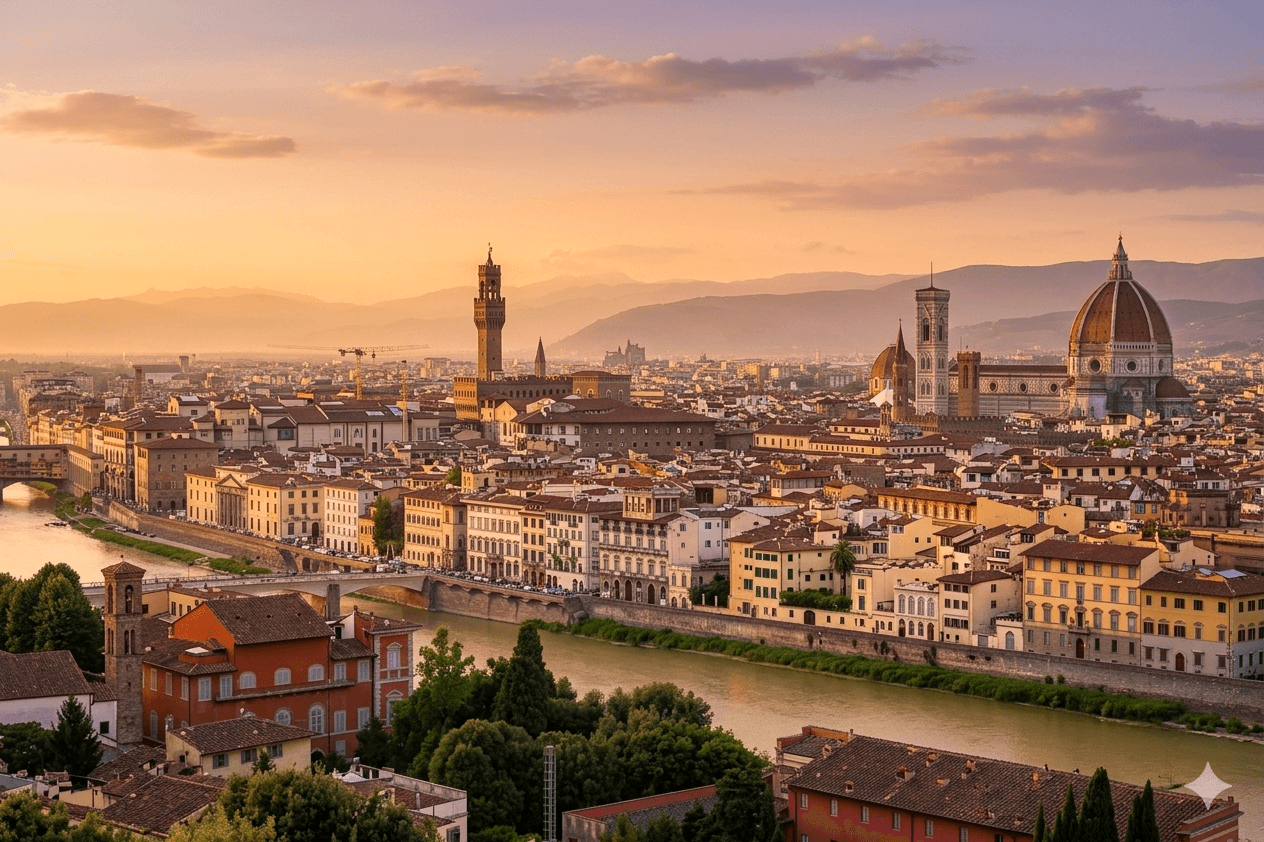
Created in 1869 by architect Giuseppe Poggi during the renovation of Florence — then the capital of Italy — this belvedere offers the city's most iconic panorama. The terrace features bronze copies of Michelangelo's David and the four Allegories of the Seasons from the Medici Chapel. The view sweeps from Forte Belvedere to Santa Croce basilica, taking in the lungarni, Arno bridges, the Duomo, the Palazzo Vecchio's battlemented tower and terracotta rooftops. Arrive 45 minutes before sunset to position your tripod before the tourist crowds arrive.
📍 43.76290, 11.26500
Coupole du Duomo (Brunelleschi)
MediumMorning
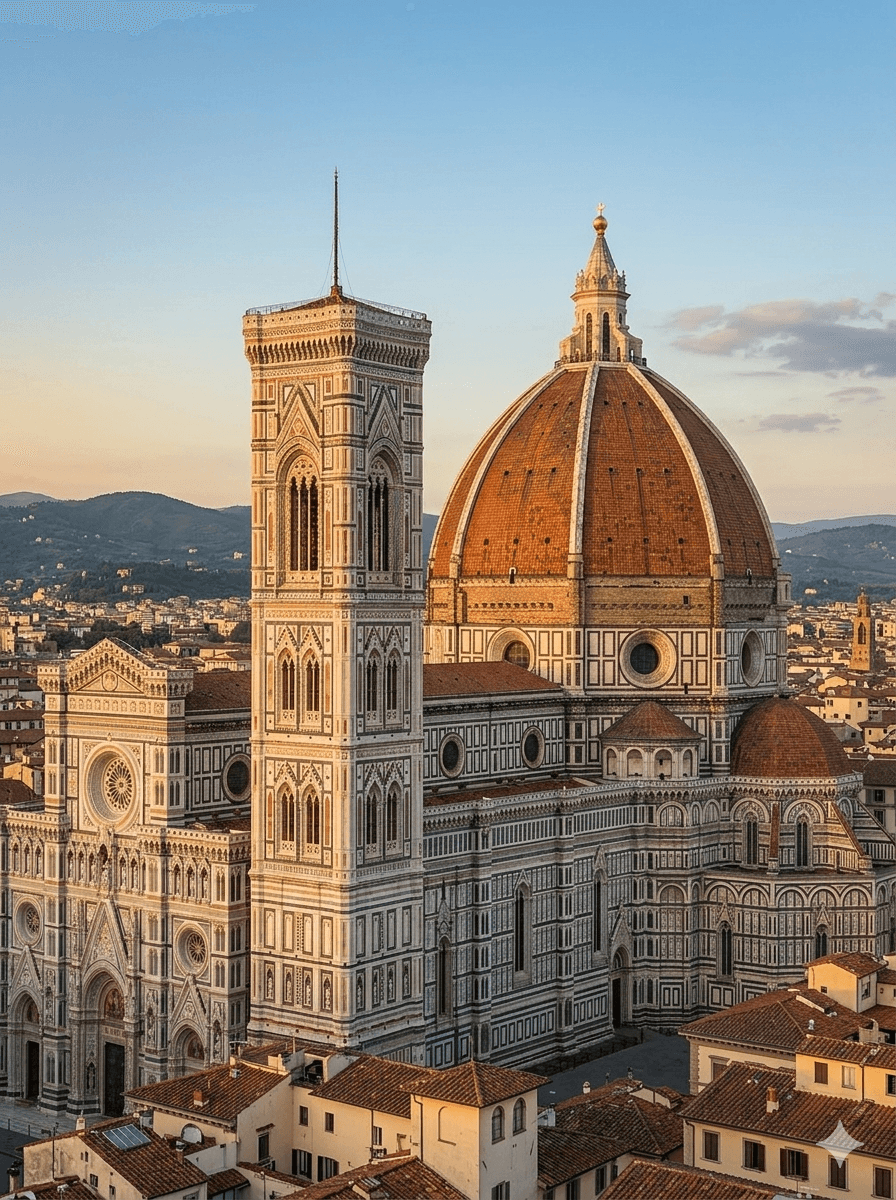
Completed in 1436 after 16 years of construction, Brunelleschi's dome is the largest masonry dome ever built: 44 m in diameter, 114.5 m total height (including the lantern), erected with 4 million bricks and 37,000 tonnes of material. A masterpiece of Renaissance engineering, its double brick shell was built without wooden centering or flying buttresses — a first in the history of world architecture. The 463 steps lead to a terrace with a unique plunging view over ochre rooftops and Tuscan hills, with Giotto's Campanile and the Baptistery directly opposite.
📍 43.77310, 11.25600
Ponte Vecchio depuis le Ponte Santa Trinita
EasyGolden Hour
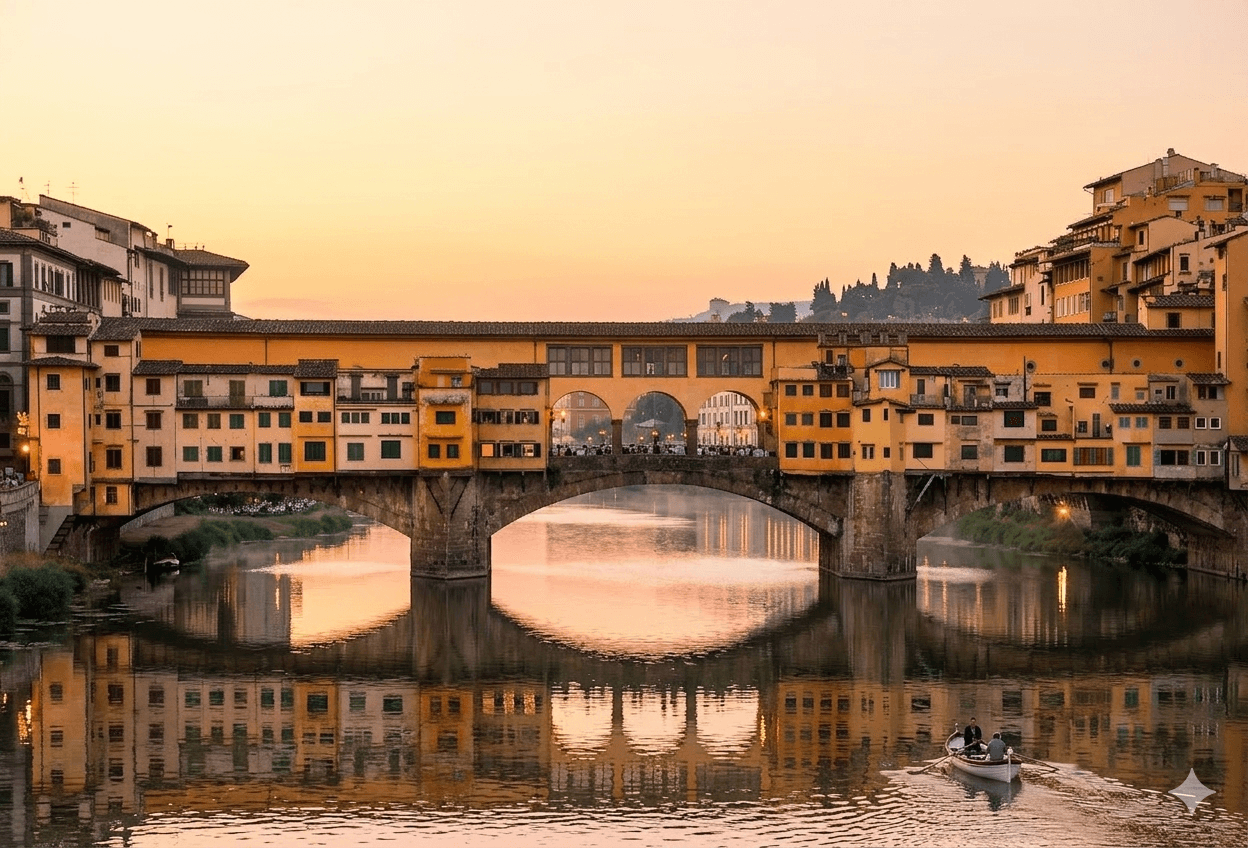
Built in the 14th century on the site of an Etruscan bridge, the Ponte Vecchio is the western world's first segmental arch bridge — an innovation allowing fewer piers for better flood flow. The only Florentine bridge spared by the Nazi retreat in 1944, it has housed goldsmiths and jewellers since the Medici era (when Ferdinando I expelled the butchers in 1593). The Vasari Corridor, a secret gallery commissioned by Cosimo I in 1565 linking the Uffizi to Palazzo Pitti, runs directly above the bridge. From Ponte Santa Trinita, compose the Florentine classic: shops reflected in the Arno at golden hour.
📍 43.76880, 11.25090
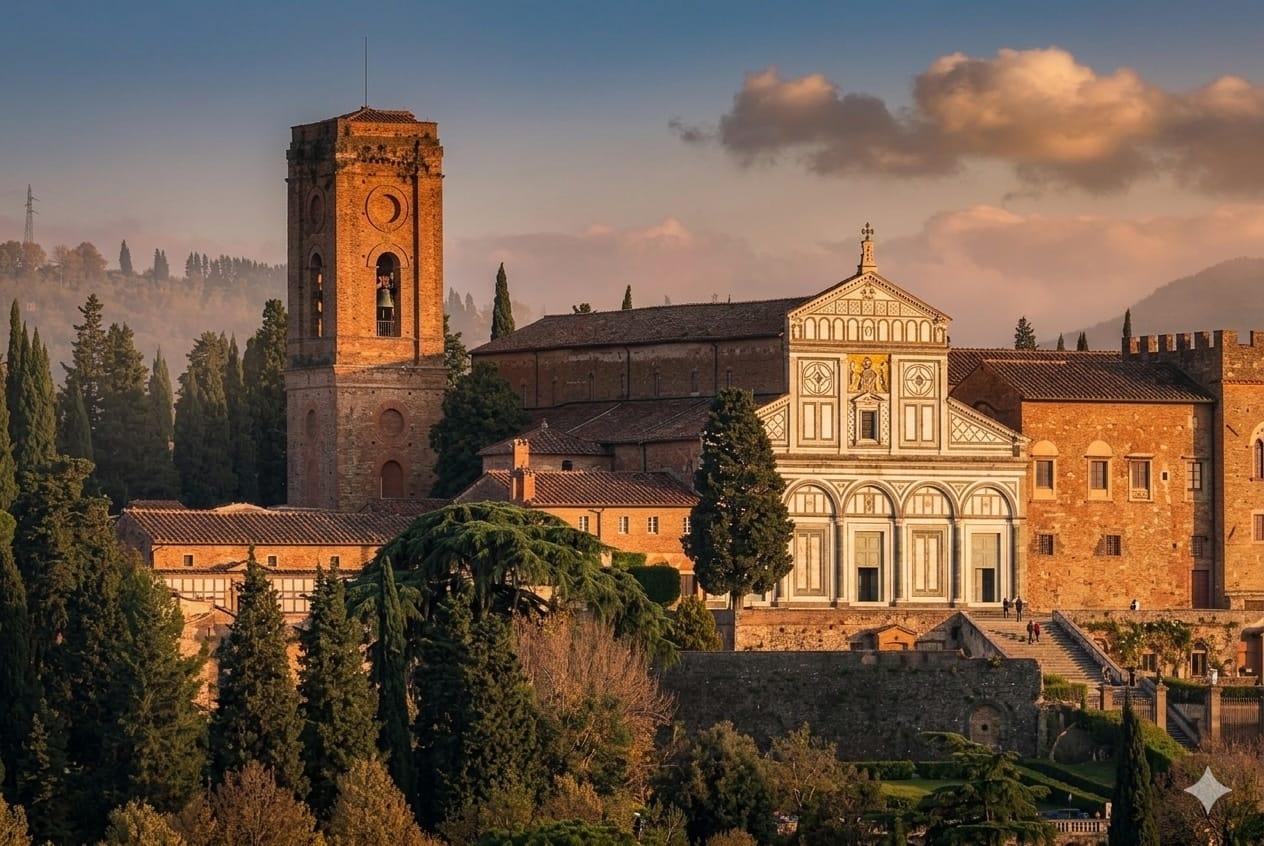
San Miniato al Monte
EasyfutureProjects.bestTime.afternoon
Begun in 1013 by Bishop Alibrando and endowed by Emperor Henry II, San Miniato al Monte is one of the finest Romanesque structures in Tuscany. Perched even higher than Piazzale Michelangelo, it offers a comparable panorama over Florence but far fewer crowds. The geometric white-and-green marble facade dates from around 1090. The adjacent Olivetan monastery is still active — monks sell handmade liqueurs, honey and herbal teas from their shop. In late afternoon, the raking light sculpts the facades of the old city with remarkable photographic precision.
📍 43.75980, 11.26470
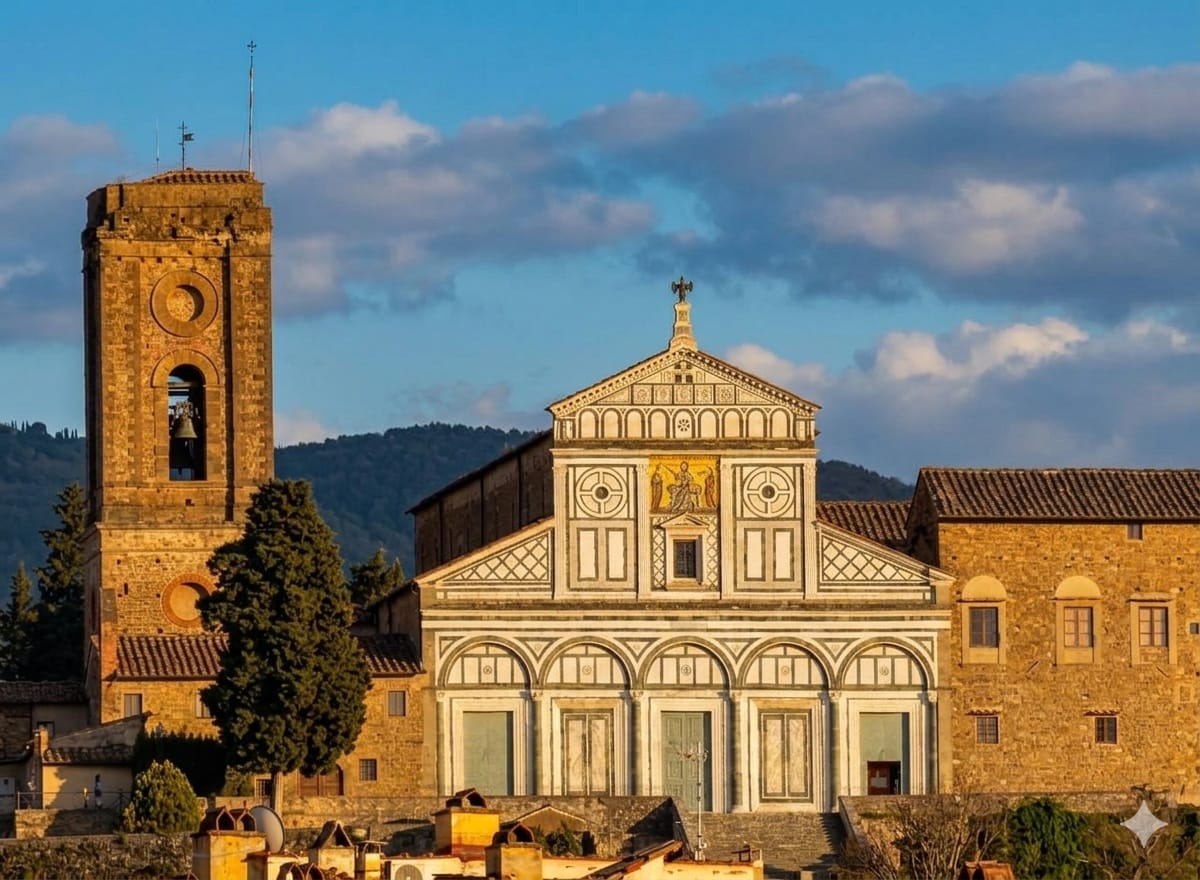
Campanile di Giotto
MediumMorning
Designed by Giotto di Bondone in 1334 and completed in 1359 (Giotto died in 1337 before seeing it finished), this 84.7 m Gothic campanile towers over the Piazza del Duomo. Its 414 steps lead to a unique view: directly opposite, Brunelleschi's dome at near-equal height — allowing you to photograph its octagonal ribs and golden lantern in ways impossible from ground level. Below, the Baptistery and Ghiberti's legendary Gates of Paradise. Unlike the dome, no advance reservation is required — arrive at opening (8am) for morning light and to avoid queues.
📍 43.77300, 11.25580
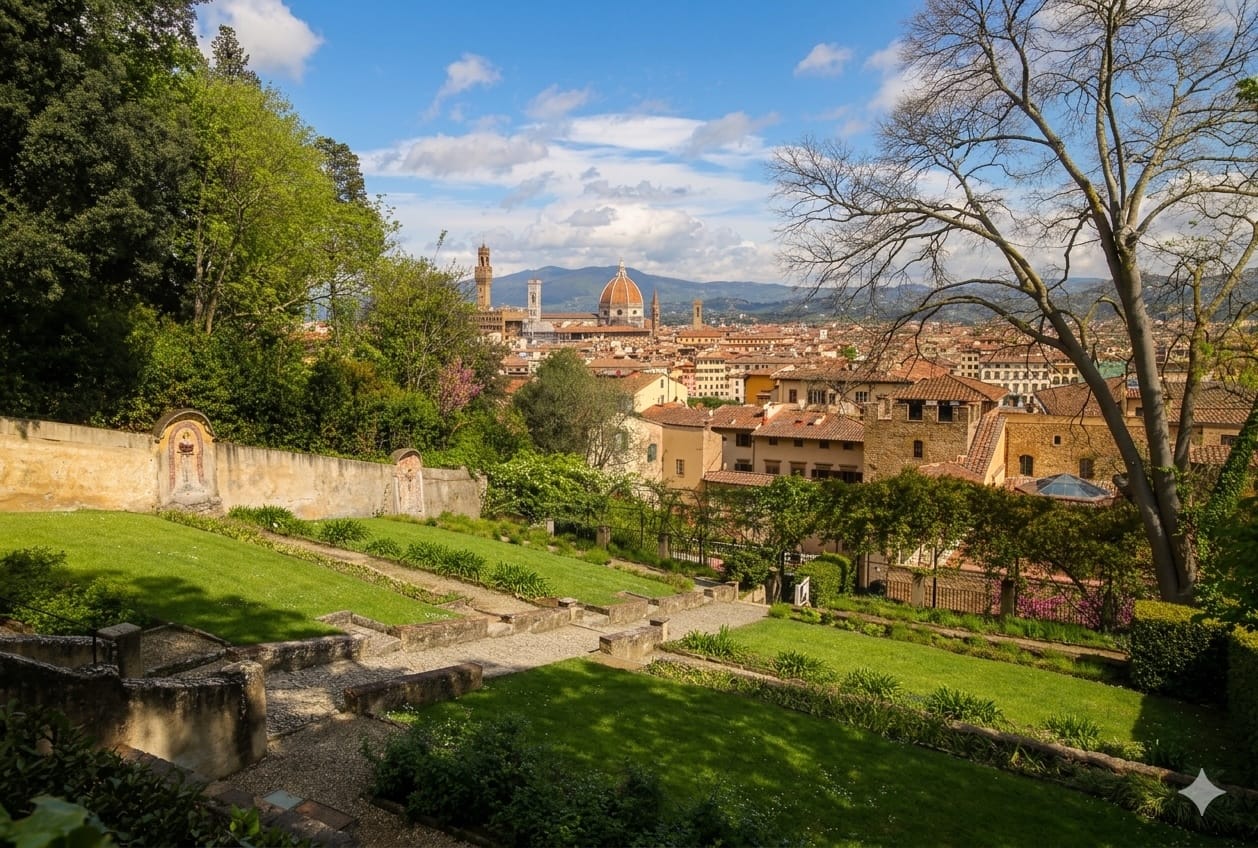
Giardino Bardini
EasyGolden Hour
Tucked away in the Oltrarno district, this terraced garden offers one of Florence's most secret panoramas. From the upper belvedere, red-tiled rooftops stretch toward the Duomo and Palazzo Vecchio in a lush green setting. In April-May, blooming wisteria creates a spectacular foreground beloved by travel photographers. Accessible by entry ticket, this garden remains one of Florence's best-kept escapes from mass tourism — perfect for unhurried, careful photography at golden hour.
📍 43.76380, 11.25350
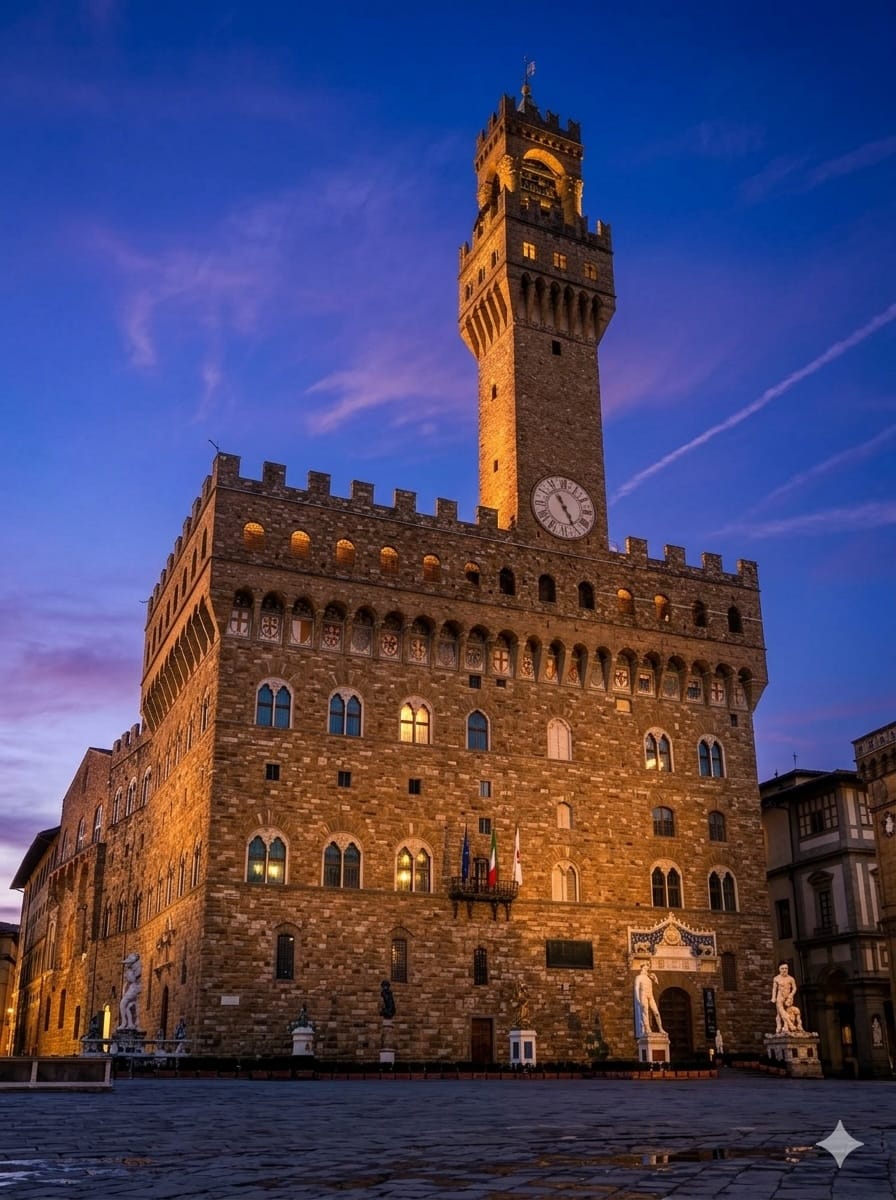
Piazza della Signoria / Loggia dei Lanzi
EasyMorning
The political heart of Florence since the Middle Ages, this square forms an exceptional open-air sculpture museum. The Loggia dei Lanzi houses masterpieces: Perseus Holding the Head of Medusa by Benvenuto Cellini (1554), The Rape of the Sabine Women by Giambologna (1583), and works by Donatello and Ammannati. In front of the Palazzo Vecchio stands a copy of Michelangelo's David (the original moved to the Accademia in 1873). This square witnessed Dante's exile (1301), Savonarola's Bonfire of the Vanities (1497) and the installation of the David (1504). Arrive before 8am to photograph the sculptures in raking morning light, without the crowds.
📍 43.76940, 11.25630
Best season
Best period: April-June and September-October (golden light, pleasant temperatures 15-25°C). Avoid July-August (35-40°C, maximum crowds). Sunrise from Piazzale Michelangelo or San Miniato al Monte — arrive 30 min early to set up a tripod. Blue hour on the Arno from Ponte Santa Trinita: 20-30 min after sunset. Campanile and Duomo dome open from 8:15am: arrive at opening for the best morning light. Piazza della Signoria ideal before 8am to beat the crowds.
Recommended equipment
Wide-angle 16-35mm essential for architecture and panoramas. Standard 24-70mm versatile for street photography and details. Telephoto 70-200mm to isolate the dome from Bardini Gardens or San Miniato, and for Loggia dei Lanzi sculptures. Light tripod for blue hour and Arno reflections. Polarizing filter to manage marble reflections and enhance the Tuscan sky. ND filter for long exposures in summer daylight. Comfortable shoes for cobblestones and the 463 steps up the dome.
Tags
italieflorencearchitecturerenaissancetoscane
Follow the Adventure
While waiting for these new projects, discover my current collection of photographs available for sale.
Discover the Gallery