CompletedMay 2026
Niagara Falls - Power of Nature
Niagara Falls, Ontario, Canada
About the project
Photographic exploration of Niagara Falls, where Horseshoe Falls plunges 57 metres at 2,800 m³/s — the most powerful waterfall in North America — revealing through its underground tunnels, its historical boat cruises at the foot of the emerald curtain of water, and its century-old cable car above the whirlpool, an infinite range of breathtaking photographic perspectives.
Niagara Falls is a group of three waterfalls — Horseshoe Falls (or Canadian Falls), American Falls and Bridal Veil Falls — spanning the Canada–United States border at the southern end of the Niagara Gorge. Formed 10,000 years ago as glaciers of the Wisconsin glaciation retreated and meltwater carved its way over the Niagara Escarpment, the falls have since eroded 10.9 km southward from their original position. Horseshoe Falls, at 57 m high and 790 m wide, is the most powerful waterfall in North America: an average flow of 2,400 m³/s, peaking at 6,370 m³/s. Their characteristic emerald green colour comes from 60 tonnes per minute of dissolved salts and rock flour torn by the erosive force of the river. This photographic project aims to capture the power and poetry of the falls from every available perspective: looking down from Table Rock's brink, peering through the rock-carved tunnels behind the falls, immersing in the mist aboard the historic cruises, or soaring above the whirlpool on the century-old Aero Car. By day and night — when floodlights illuminate the cascading waters in shifting colours — Niagara Falls offers infinite photographic possibilities.
Access
Toronto Pearson International Airport (YYZ) 130 km away, then QEW highway (1h30). GO Transit buses from Toronto Union Station. WEGO shuttles in the Niagara Falls tourist area. Paid parking in the area (20-30 CAD/day). Table Rock Welcome Centre as ideal starting point. Passport recommended to cross to the American side (Rainbow Bridge). Niagara Parks Adventure Pass for main attraction access.
Location
Lieux
Points de vue
Chargement de la carte...
Photography Viewpoints
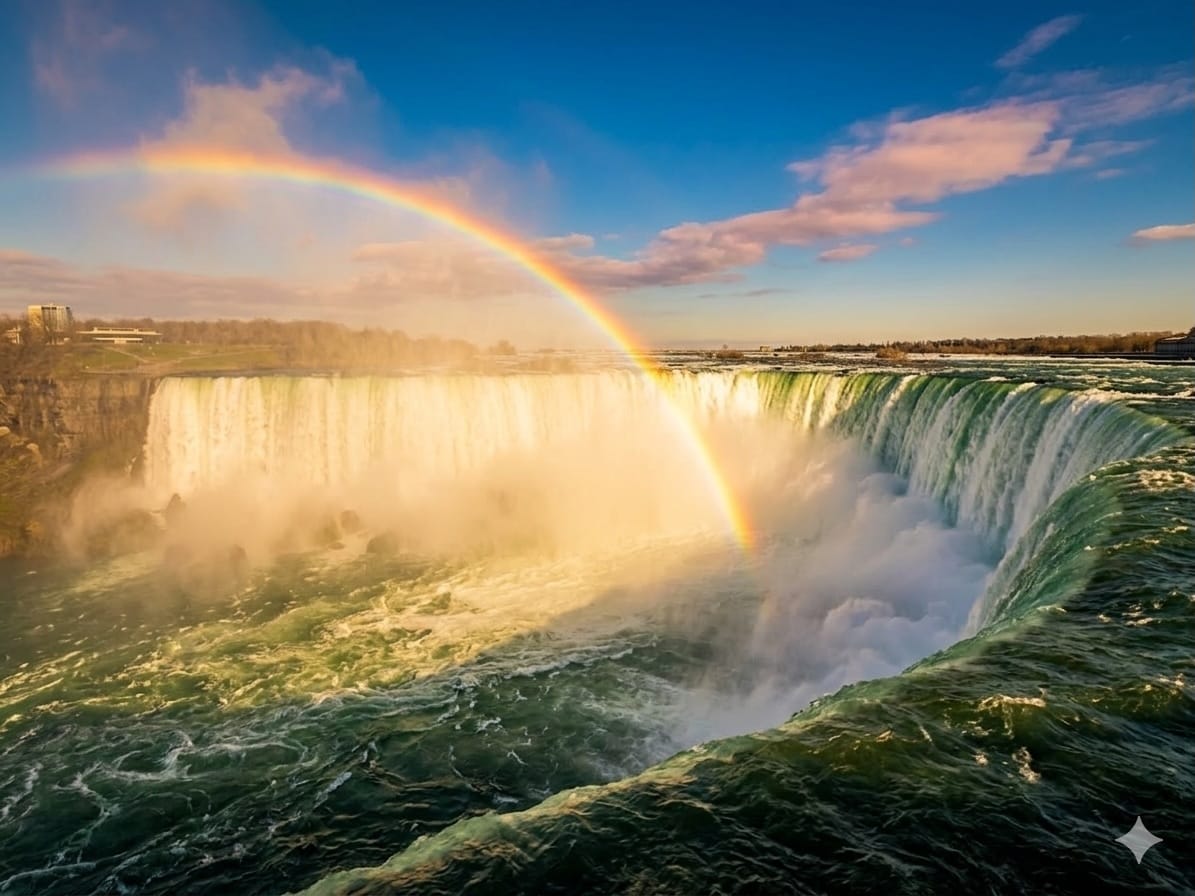
Table Rock - Horseshoe Falls
EasyMorning
Table Rock, the closest viewpoint to Horseshoe Falls, a direct overhang at the very brink of the falls. Plunging view of the 790m-wide emerald curtain of water dropping 57m below at 2,800 m³/s in summer. This emerald green hue comes from 60 tonnes per minute of dissolved salts and rock flour ground by erosion. Permanent mist creates rainbows in the morning when sunlight strikes the droplets. Rain protection essential for camera equipment. Early morning (before 9am) to avoid crowds and benefit from raking light. Free access from Table Rock Welcome Centre.
📍 43.07930, -79.07720
Skylon Tower - Vue aérienne
EasySunset
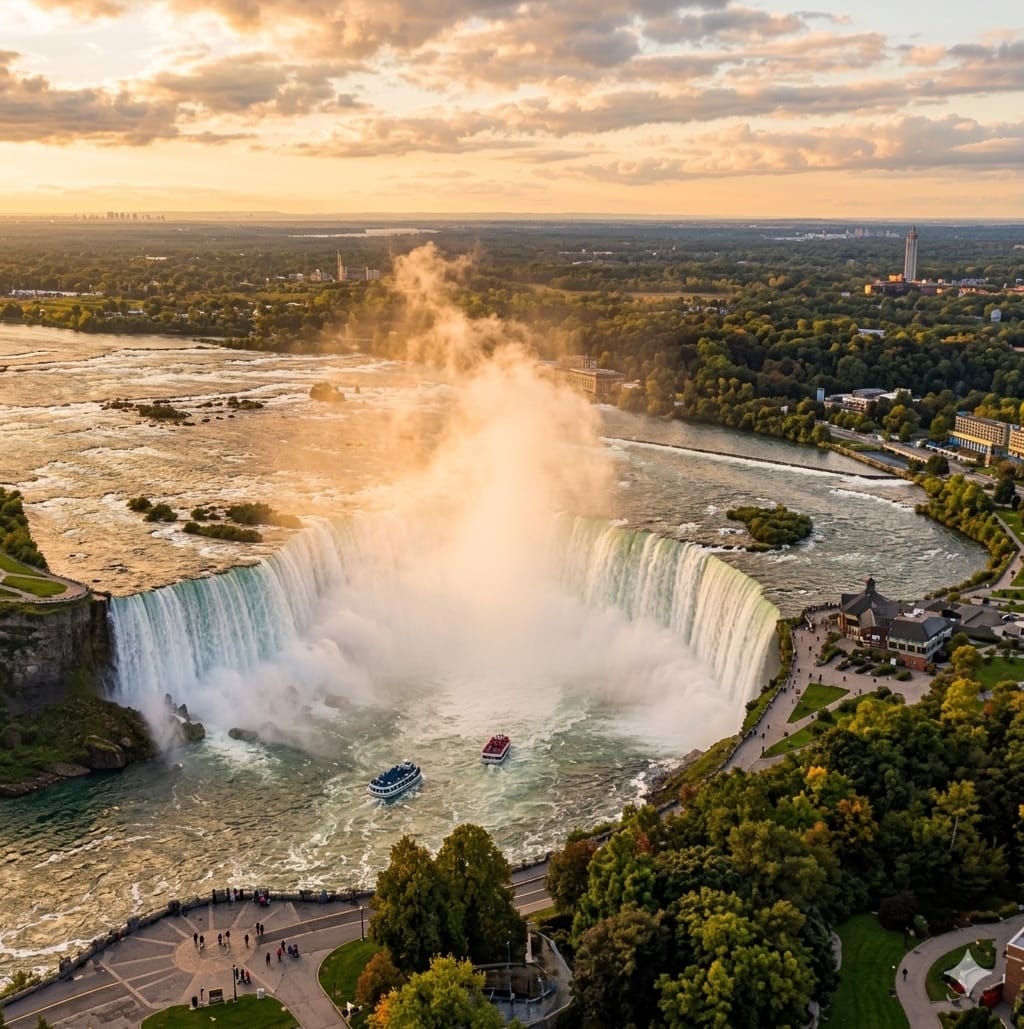
Skylon Tower (236m), the region's tallest observation platform, offering a 360° aerial view over all three falls — Horseshoe Falls (57m high, 790m wide), American Falls (21-30m) and Bridal Veil Falls — the Niagara River and the Canada-US border, with Toronto visible on clear days. Spectacular sunset with the falls in silhouette and golden mist. Exceptional night view during the coloured floodlight illuminations (from dusk). Paid entry. Angled windows: use a lens hood or press lens against the glass.
📍 43.08520, -79.07890
Niagara Glen - Bord de rivière
MediumGolden Hour
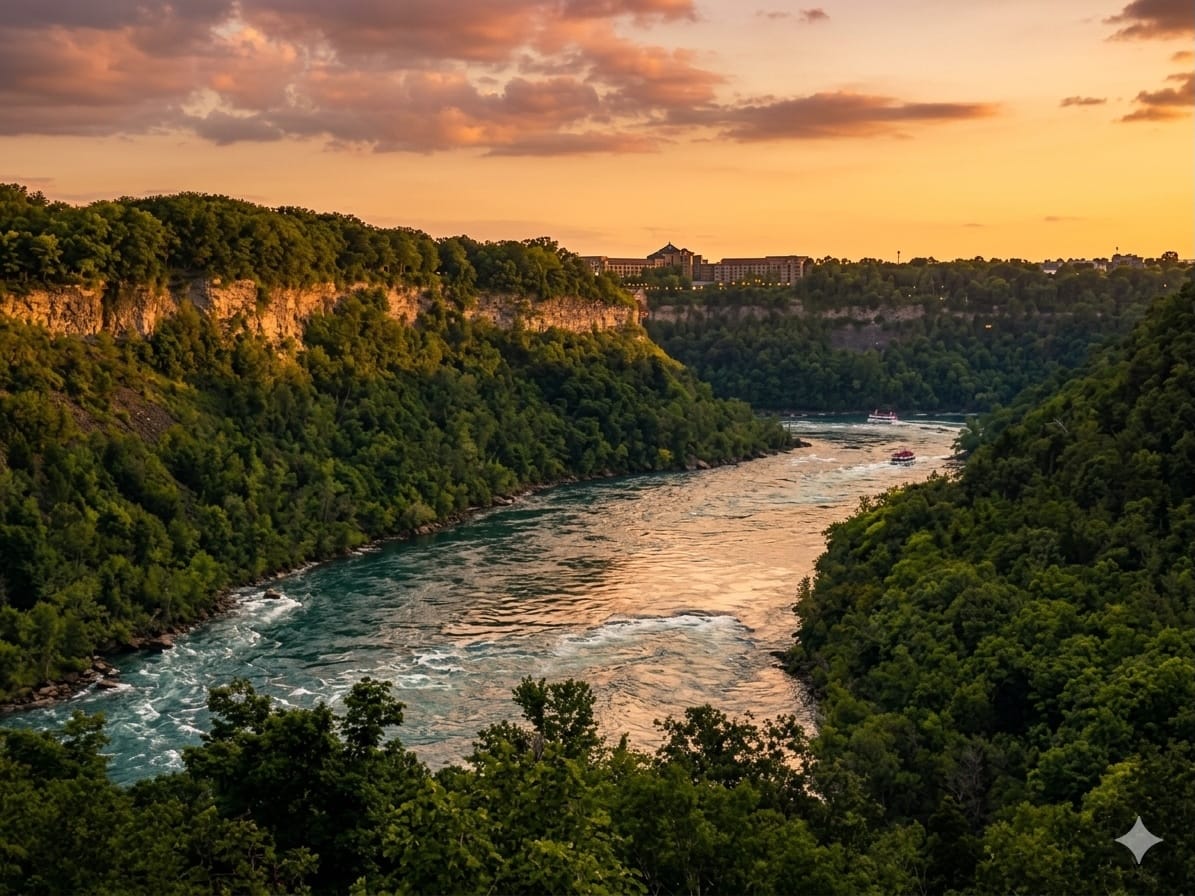
Niagara Glen Nature Reserve, a trail descending to the Niagara riverbank via 300 steps cut into the limestone cliff. Unique water-level perspective on turbulent rapids and gorge walls carved by 10,000 years of erosion retreating southward. The river sharply changes direction here, creating powerful eddies. Stunning golden hour with light filtering through ancient cedar forest. Steep trail, good physical fitness required. Tripod recommended for long exposures on the rapids. Free access, rarely crowded.
📍 43.12800, -79.05600
Journey Behind the Falls
EasyMorning
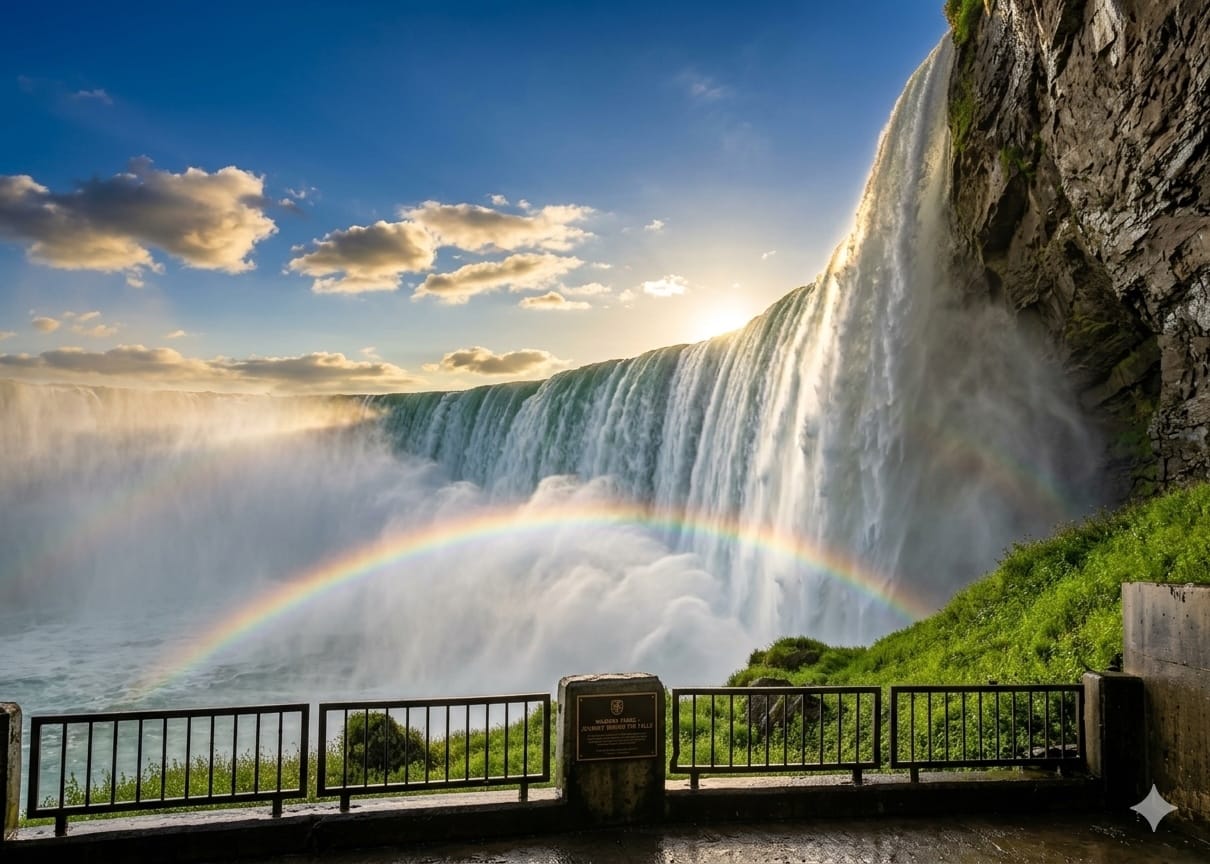
Journey Behind the Falls, a unique underground experience reached by elevator through tunnels carved into the limestone bedrock at the very base of Horseshoe Falls. From the observation platforms, you contemplate the hidden face of the waterfall through the emerald curtain of water — just metres from the 2,800 m³/s torrent plunging in a roar amplified by the rock. A radically different photographic perspective: low-angle shot of the water veil backlit by natural light. Omnipresent mist: weatherproof housing or waterproof cover absolutely essential. Elevator access from Table Rock Welcome Centre. Niagara Parks pass required. Diffused overcast light ideal for soft, even tones.
📍 43.07930, -79.07810
Niagara City Cruises
EasyMorning
Niagara City Cruises, heir to the Maid of the Mist operating since 1846 — the oldest tourist attraction at the falls — taking passengers into the heart of the mist at the foot of Horseshoe Falls. An incomparable perspective looking upward from water level: 57m of waterfall above you, a 790m-wide curtain of water thundering down. The provided poncho is insufficient: a waterproof cover is essential for the camera. Departures from the dock below Table Rock. Morning light ideal for the rainbow in the mist (sun to the east, falls to the west). Booking recommended in peak season (June-August).
📍 43.08010, -79.07570
Whirlpool Aero Car
EasyGolden Hour
Niagara Whirlpool Aero Car, a century-old cable car built in 1916 by Spanish engineer Leonardo Torres Quevedo — one of the oldest still in operation worldwide — soaring 76m above the Niagara Whirlpool (250m in diameter) formed by the river's abrupt change of direction through the gorge, 4km downstream from the falls. Unique aerial view of churning turquoise waters set in vertical limestone canyon walls. The cable car's movement requires a fast shutter speed (minimum 1/500s) to freeze water details. Wide-angle to encompass the full gorge, telephoto for whirlpool details. Niagara Parks pass required. Morning golden hour on the gorge walls.
📍 43.11630, -79.06150
Rainbow Bridge - Passerelle
EasySunset
Rainbow Bridge, the first bridge downstream from the falls opened in November 1941, connecting the twin cities of Niagara Falls (Canada and USA), offers one of the only vantage points with a simultaneous view of all three falls — Horseshoe, American and Bridal Veil — from the gorge 50m above the river. Unique frontal composition with all three falls aligned in the background. Raking morning light from the Canadian side. Spectacular coloured night illuminations. Free pedestrian access from Queen Victoria Park on the Canadian side. Passport required to cross to the American side and reach Prospect Point (best angle on American Falls).
📍 43.09030, -79.06770
Best season
Best period: May-October (maximum flow in June, nighttime illuminations). June ideal: long days, powerful flow after snowmelt. Sunrise from Canadian side for frontal light on the Horseshoe Falls. Midday for rainbows in the mist (high sun). Sunset from Skylon Tower for golden panorama. Nighttime illuminations year-round (from nightfall). Winter spectacular with ice formations, but limited access.
Recommended equipment
Weather-sealed camera or rain protection essential (constant mist near the falls). Wide-angle lens (16-35mm) to embrace the full scope of the falls, standard lens (24-70mm) versatile, telephoto (70-200mm) for cascade details and compressions. Sturdy tripod for long exposures (silky water effect). ND filter (6-10 stops) essential for daytime long exposures. Polarizing filter to manage reflections and intensify rainbows. Multiple microfiber cloths to wipe mist from lens. Waterproof bag for equipment.
Tags
canadaniagarachuteseaunatureontario
Follow the Adventure
While waiting for these new projects, discover my current collection of photographs available for sale.
Discover the Gallery